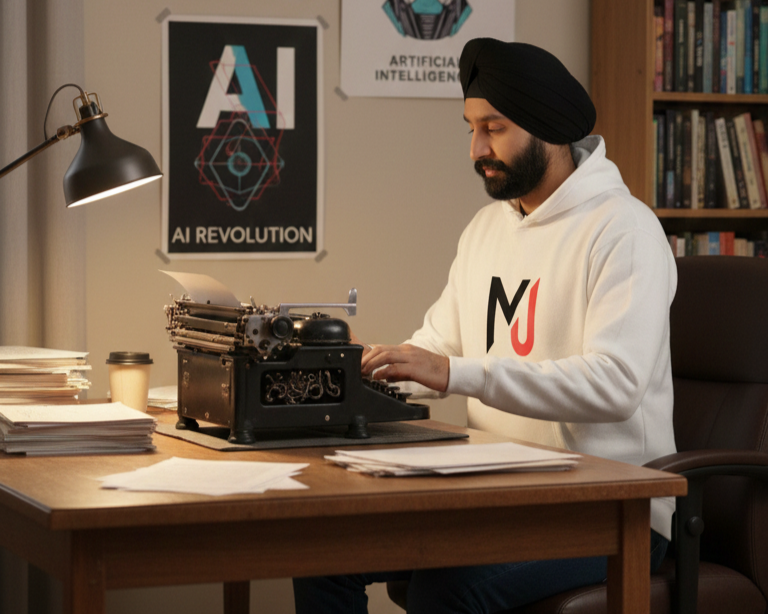
If you’re a marketer, you’ve probably noticed something feels… off. Your reach is tanking. Your audience-building playbook from 2023 might as well be from the Stone Age. And suddenly, everyone’s talking about optimizing for AI instead of Google.
Welcome to March 2026, where the rules of digital marketing just got rewritten overnight. After digging through the latest industry reports and platform updates, I’ve identified the most jaw-dropping shifts happening right now. Some of this will validate your worst fears. Some of it might just save your career.
Your Followers Don’t Matter Anymore (And That’s Actually Freeing)
Here’s the brutal truth: influencer organic reach has collapsed from 20% five years ago to a mere 2% today. The “social graph” model where follower counts determined your reach is dead, killed by TikTok-style interest algorithms that prioritize content quality over audience size.
This is the “Accountability Pivot” every platform is making, and while it feels devastating for established creators, it’s actually democratizing. Your next viral post doesn’t need 100K followers behind it. It just needs to be genuinely interesting to the algorithm’s target audience. The playing field just got leveled in a way we haven’t seen since early Instagram.
AI Agents Are Your New Customer (Whether You Like It or Not)
Forget personas. Forget buyer journeys. You’re now marketing to machines that make decisions for humans.
Welcome to “Agentic Commerce,” where AI assistants are managing shopping workflows and making purchasing decisions on behalf of consumers. A staggering 77% of users now trust AI-led interactions to replace traditional apps. This isn’t some distant future scenario. This is happening in late 2026 storefronts right now.
The implication? Your beautifully crafted emotional appeals and lifestyle imagery might never reach human eyeballs. Instead, you need to make your brand “machine-readable” through structured data, clear ingredient lists, and factual claims that AI can parse and recommend. The K-Beauty sector already figured this out, with consumers (and their AI agents) scrutinizing fermented actives and microbiome care ingredients over generic marketing fluff.
SEO Is Dead. Long Live GEO and AEO.
Search Engine Optimization had a good run. But when 74% of shoppers use AI for product discovery and ChatGPT becomes the new Google, ranking on page one doesn’t matter if you’re not being cited in AI-generated answers.
Enter Generative Engine Optimization (GEO) and Answer Engine Optimization (AEO). Marketing agencies are already launching proprietary frameworks to ensure brands appear in ChatGPT summaries and Perplexity responses. The new KPI isn’t “page one rankings” but rather “citation frequency” within AI-synthesized answers.
One agency has already cracked the code, reducing custom audience building from 48 hours to 5 minutes using AI agent platforms. If you’re still optimizing for Google’s 2025 algorithm, you’re already behind.
X Just Made Brand Safety an AI Problem (Not a Human One)
In a pitch deck that leaked this month, X is now using Grok AI to promise advertisers a 99.99% brand safety score with pre-bid adjacency controls. They’re also rolling out integrated “Paid Partnership” labels to meet FTC transparency rules and reopening the platform to sponsored crypto posts.
But here’s the catch: while AI can flag obvious risks, human verification of these safety scores remains critical. Brands that blindly trust the 99.99% number without spot-checking are setting themselves up for the next viral brand safety disaster. The technology is impressive, but it’s not infallible.
Meta Is Bringing Stablecoins to Instagram (And It Changes Everything)
Reportedly launching in late 2026, Meta is seeking third-party providers like Stripe to integrate US dollar-pegged stablecoin payments across Facebook, Instagram, and WhatsApp.
This isn’t just about crypto hype. This is about eliminating friction in global social commerce and enabling near-instant cross-border creator payouts. For brands running international campaigns, this could collapse payment processing from days to seconds. For creators in emerging markets, this could mean finally getting paid without losing 30% to currency conversion and transfer fees.
The social commerce landscape is about to get very, very fast.
One Brand Made $50 Million By Letting Creators Do the Work
Viking Revolution, a men’s grooming brand, hit $50 million in revenue through a strategy that should terrify traditional CMOs: they dominated Amazon’s algorithm first, then scaled via TikTok Shop by generating 18,000 creator videos in Q4 2025 alone.
They didn’t build a massive in-house content team. They didn’t hire a celebrity spokesperson. They just made it incredibly easy for creators to promote their products and let the algorithm distribute the winners. In the age of agentic advertising, your competitive advantage isn’t your creative department. It’s your ability to empower thousands of micro-creators to test messages at scale.
Dr. Squatch took this even further with “AI Infinity Testing,” refining thousands of messaging variations and generating over $500,000 from AI-tested messages alone, with a 91% lift in clicks.
Compliance Is No Longer a Legal Afterthought
New laws in Indiana, Alaska, and Malaysia are targeting addictive design patterns, deepfakes, and youth protection with teeth. Indiana’s law, effective January 2026, requires age verification and parental consent for users under 16 while banning infinite scroll for minors.
The era of “move fast and break things” is over. Brands now need to operationalize compliance into the creative process itself, not treat it as a final legal checkbox. This means designing age-appropriate defaults, building parent-facing transparency tools, and proactively addressing algorithmic manipulation before regulators come knocking.
For marketers, this isn’t just about avoiding fines. It’s about building trust in an era where 30% of you cite rising customer acquisition costs as your top concern. Precision and trust beat scale and risk, every single time.
The Bottom Line: We’re not in a gradual evolution of digital marketing. We’re in a hard pivot where the platforms, the audience, and even the decision-makers (hello, AI agents) have fundamentally changed in a single month.
The brands winning right now aren’t the ones with the biggest budgets or the most followers. They’re the ones who recognized that the game changed and adapted faster than their competitors could even understand the new rules.
So here’s the question worth pondering: Are you optimizing for the marketing landscape of 2025, or are you building for the AI-mediated, agentic, compliance-first world of 2026?
Because in March 2026, there’s no middle ground left.
– Manpreet Jassal
Leave a Reply