You’ve been lied to. Not by scammers or gurus, but by an entire industry that convinced you marketing is about going viral, building a personal brand, and “hustling” your way to millions of followers.
Seth Godin, the marketing legend who literally wrote the book on permission marketing, just dismantled that entire playbook. And what he’s saying instead might make you completely rethink your career strategy. Some of this will sting. But if you’re brave enough to listen, it might also set you free.
Marketing Isn’t About You (And It Never Was)
Here’s the uncomfortable truth that most creators refuse to accept: marketing is about serving others, not hype or promotion.
Godin emphasizes that true marketing is no longer about advertising, interrupting people, or hustling for attention. Instead, the foundational step in any successful project is identifying who you seek to serve, understanding their underlying beliefs and fears, and determining what change you want to make in their lives.
This requires a fundamental shift in thinking. Stop asking “What do I want to create?” and start asking “Who do I want to serve, and what do they actually need?” Developing empathy by observing people’s habits is far more effective than just creating something and assuming others will want it.
The difference? One approach builds a sustainable business. The other builds a pile of ignored content and a very expensive therapy bill.
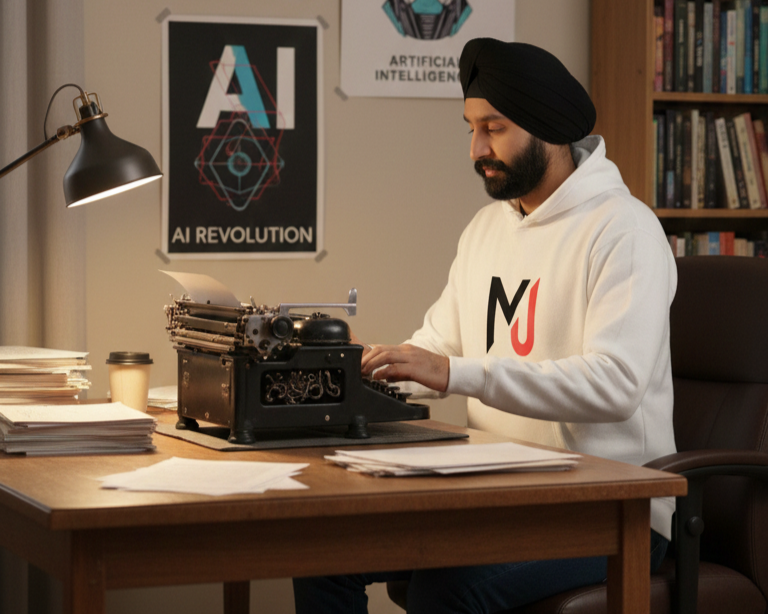
AI Will Steal Your Job (But Only If Your Job Is Mediocre)
Godin views AI as the biggest cultural change since electricity. And he’s not sugarcoating it: AI will replace average, “mediocre” human output, such as standard copywriting.
But here’s where it gets interesting. AI cannot replace leaders who take risks and do things that “might not work,” because AI currently lacks that nonlinear, creative approach. The machine can optimize. It can synthesize. It can produce competent work at scale. But it cannot lead.
AI will replace mediocre work, but not true leadership.
So instead of fearing AI, Godin suggests using it as a “magical librarian” to challenge your ideas, find contradictions, and generate better insights. The creators who survive the next decade won’t be the ones hiding from AI. They’ll be the ones using it to amplify their uniquely human capacity for risk, intuition, and genuine innovation.
If your competitive advantage is being “pretty good at copywriting,” start updating your resume. If your advantage is doing things that might not work and leading people through uncertainty, you just became more valuable than ever.
Forget Authenticity. Build a System Instead.
This one’s going to hurt, but Godin argues that authenticity is highly overrated.
Why? Because audiences don’t actually want to see a creator having a cranky, bad day. They want the consistent, interesting role that the creator has promised them. They showed up for a reason, and that reason wasn’t to watch you spiral on camera about your latest existential crisis.
True professionals build resilient systems that allow them to show up and produce great work consistently, even on days when they don’t feel inspired. This isn’t about being fake. It’s about being professional. It’s about respecting your audience enough to deliver what you promised, regardless of whether you woke up feeling inspired.
The amateur posts when they feel like it and calls it “authentic.” The professional builds a system that ensures quality output whether they feel like it or not. Guess which one still has an audience in five years?
A Million Views Means Nothing If Nobody Remembers You Tomorrow
While short-form platforms like TikTok can generate millions of views, Godin points out these interactions are often shallow and function as a highly “leaky funnel.”
Instead, he advises focusing on “enrollment,” which means getting a smaller, dedicated audience to voluntarily subscribe and commit to deeper engagement through mediums where they might experience the discomfort necessary for true learning, like a 10-minute YouTube video or an email list.
Think about it: would you rather have 5 million people scroll past your 15-second video and forget you instantly, or 5,000 people who voluntarily gave you their email address and actually read what you send them?
Owning your connection to your audience, like an email list, is far more resilient than relying on rented social media algorithms that you don’t control. When the algorithm changes (and it always does), your viral strategy evaporates. But those email subscribers? They’re yours, and the platform can’t take them away.
Deep enrollment matters more than massive, shallow virality. Always.
Stop Confusing Freelancing with Entrepreneurship (They’re Totally Different Games)
Here’s a trap that destroys thousands of creators every year: you must know if you are a freelancer or an entrepreneur, because the rules are completely different.
A freelancer gets paid for their own work and scales by finding better, higher-paying clients rather than simply working more hours or hiring cheap labor. An entrepreneur, on the other hand, builds a system larger than themselves, usually by hiring people to do the work.
Godin warns that if a freelancer tries to scale by hiring out their core work, they often end up trapped and burned out. You can’t outsource your unique insight. You can’t hire someone cheaper to be you. If your value is your personal expertise, trying to scale through hiring just creates a management nightmare where you’re no longer doing the work you love.
Know which game you’re playing. Then play it correctly. Don’t try to turn freelancing into entrepreneurship just because someone on LinkedIn told you that’s the only way to “build wealth.” If you love the craft and you’re excellent at it, charge more and work with better clients. You don’t need to become a CEO.
The Smallest Viable Audience Is Your Superpower
In a world obsessed with scale, Godin advocates for serving the “smallest viable audience” rather than endlessly chasing the biggest possible reach, which leads to an exhausting cycle of jealousy.
This is deeply countercultural in 2026, where every marketing influencer is screaming about “10X growth” and “scaling to millions.” But Godin measures his own success by the meaningful change he creates for his audience, noting that obsessing over maximizing wealth or competing for ridiculous amounts of money does not actually lead to happiness.
The math is simple: if you can make a genuine difference for your audience, the money will naturally take care of itself. But if you chase the money by diluting your message to appeal to everyone, you end up making a difference for no one.
You don’t need a million followers. You need the right thousand people who genuinely care about the change you’re trying to make. Serve them deeply. Ignore everyone else.
The Bottom Line: Seth Godin just handed you permission to stop playing the algorithm game, stop chasing viral moments, and stop pretending that “authenticity” means posting every unfiltered thought that crosses your mind.
Instead, he’s challenging you to do something much harder: identify who you actually want to serve, build systems that let you show up for them consistently, and create meaningful change for a small group of people who genuinely care.
In a world where AI is about to flood the internet with mediocre content and everyone’s competing for shallow attention, the creators who win will be the ones brave enough to go deep instead of wide.
So here’s the question: are you building for a million strangers who’ll forget you tomorrow, or are you building for the smallest viable audience that will remember you forever?
– Manpreet Jassal
Leave a Reply