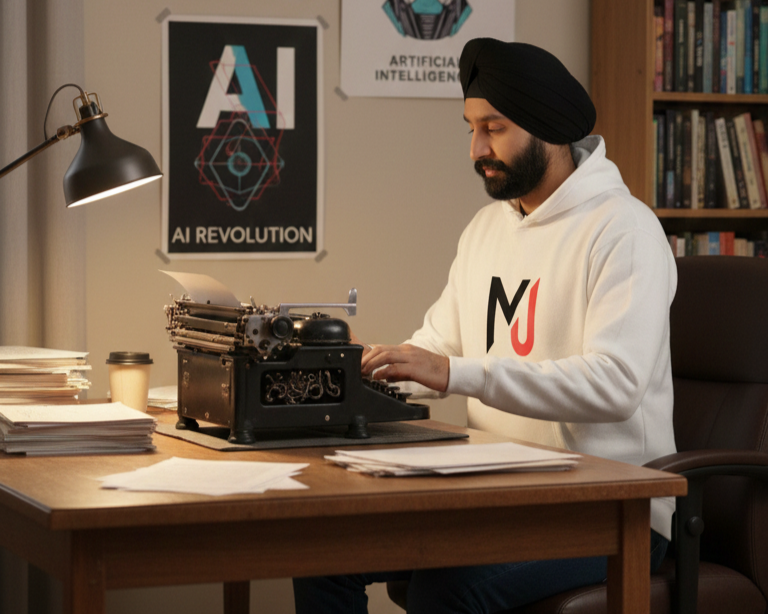
While you were busy optimizing your latest campaign, the marketing world quietly shifted beneath your feet. This past week brought a wave of changes that signal something bigger than seasonal trends or temporary tactics. We’re witnessing a fundamental reimagining of how brands connect with consumers, powered by technology that thinks for itself and a cultural hunger for realness over polish.
From major industry conferences in Hong Kong to earnings reports that reveal where the money is actually flowing, the signals are clear: the old playbook is being rewritten. AI is evolving beyond content generation into something far more powerful. Celebrity-driven campaigns are losing ground to diverse, authentic representation. And the metrics that matter are changing faster than most marketing teams can adapt.
Here are the seven most important marketing trends and shifts from the past week that will shape how you build campaigns in 2026 and beyond.
Agentic AI is the New Frontier (And It’s Nothing Like the AI You’re Using Now)
You’ve been using AI to generate blog posts and social media captions. That’s table stakes now. The real revolution happening in marketing technology is the emergence of agentic AI, and it represents a fundamental leap beyond simple automation.
At the recent MarketingPulse and eTailingPulse conferences in Hong Kong, which attracted over 1,700 industry professionals, the conversation centered on AI that doesn’t just create content but independently navigates complex enterprise architectures to drive personalized customer experiences. This isn’t about asking ChatGPT to write your email newsletter. This is about AI systems that can analyze customer data, identify patterns, make strategic decisions, and execute campaigns across multiple channels without human intervention at every step.
Industry experts from Tencent and Alibaba emphasized a critical point: while AI inspires creativity, the real competitive edge in digital transformation lies in combining AI-driven data insights with emotional storytelling and what they’re calling “agile merchandising” to meet consumer demand for instant fulfillment.
Translation? The brands winning in e-commerce marketing right now aren’t choosing between human creativity and AI efficiency. They’re building systems where AI handles the data-heavy personalization and operational complexity, freeing human marketers to focus on the emotional resonance and cultural narrative that actually drives purchasing decisions.
Gen X is About to Become Your Most Important Audience (Whether You’re Ready or Not)
Here’s a marketing trend that’s flying under the radar: the economic center of gravity is shifting dramatically toward Gen X, and most brands are still marketing like it’s 2015.
Indian brands are leading a fascinating movement away from the young, flawless celebrity archetypes that have dominated advertising for decades. Instead, they’re embracing a broader mix of “confident and socially relevant” faces, including older consumers and, notably, men in categories traditionally marketed to women.
The numbers driving this shift are staggering. Gen X consumers are expected to account for over $500 billion in consumption by fiscal year 2030. That’s not a niche segment. That’s a fundamental realignment of purchasing power that demands a complete rethinking of brand representation and messaging.
Brands like Kalyan Jewellers and Vinsmera are now targeting specific cohorts such as men as primary jewelry consumers rather than just gift-givers. This reflects a broader cultural shift toward authenticity and away from the narrow demographic stereotypes that have constrained marketing for years.
If your brand’s visual identity and messaging still centers exclusively on 25-year-old influencers, you’re not just missing an opportunity. You’re actively alienating the demographic with the most spending power.
Influencer Marketing is Growing Up (And Getting Serious About ROI)
The influencer marketing platform market is projected to hit $1.15 billion in 2026, but the nature of influencer partnerships is transforming in ways that separate professional operations from amateur hour.
The era of “send free products to micro-influencers and hope for the best” is ending. The focus has shifted decisively toward performance accountability and data-driven creator discovery. Brands are demanding mobile-based software that allows for real-time campaign tracking and faster approval cycles, reflecting a need for more resilient influencer ecosystems that can prove their value.
What does this mean practically? Influencer marketing is transitioning from a brand awareness play to a performance marketing channel with the same accountability standards as paid search or programmatic advertising. The influencers and platforms that survive this transition will be the ones that can demonstrate clear attribution, track conversions, and optimize campaigns based on hard data rather than vanity metrics like follower counts.
If you’re still measuring influencer success primarily by reach and engagement without connecting it to actual business outcomes, you’re about to get left behind by competitors who treat influencer partnerships as a measurable, optimizable marketing channel.
Trust Seals are Influencing Two-Thirds of Purchase Decisions
In an increasingly complex and crowded marketplace, brand trust has become a tangible competitive advantage that directly impacts consumer behavior. Newsweek and BrandSpark’s recognition of the UK’s “Most Trusted Brands” revealed a striking statistic: 66% of consumers are positively influenced by trust seals and certifications.
This matters more than it might seem at first glance. In the age of endless choice and information overload, consumers are actively looking for shortcuts to confident purchasing decisions. Trust badges, third-party certifications, and “most trusted” designations aren’t just nice-to-have credibility signals. They’re conversion drivers that influence the majority of your potential customers.
The implications for marketing strategy are clear: building and showcasing trust isn’t a soft, long-term brand play. It’s a tactical advantage that affects purchase decisions today. Whether through third-party certifications, customer reviews prominently displayed, security badges on checkout pages, or industry awards, demonstrating trustworthiness needs to be as central to your conversion optimization as your pricing strategy.
Food and Beverage Brands are Creating Cultural Moments Through Unlikely Collaborations
The upcoming Licensing Expo 2026 highlighted food and beverage as a “goldmine” for brand extensions, and the examples they’re pointing to reveal a fascinating shift in how consumer brands create buzz and drive engagement.
Viral successes like the Pringles x Crocs collection demonstrate how F&B brands are moving beyond traditional marketing to create cultural moments through unexpected collaborations. This isn’t about slapping your logo on a t-shirt. It’s about finding partner brands that create cognitive dissonance in the best possible way, generating organic social conversation and genuine consumer excitement.
The genius of these collaborations is that they work on multiple levels simultaneously. They generate massive earned media coverage. They create collectible, limited-edition products that drive urgency. They position brands as culturally savvy and willing to take creative risks. And they give consumers a way to express their brand affinity in unexpected contexts.
The lesson for marketing teams isn’t to immediately start brainstorming bizarre brand partnerships. It’s to recognize that in a saturated media environment, brands that create genuine cultural moments through unexpected creativity will cut through the noise far more effectively than another perfectly executed but predictable campaign.
Digital-First Publishers are Bringing Marketing In-House for Direct Revenue
TX Group’s 20 Minuten completed its transition to 100% digital publication at the end of 2025, and one detail in their announcement reveals an important trend: they’re bringing marketing back in-house to increase direct revenue.
This reflects a broader shift in how digitally native and digital-first companies are thinking about marketing operations. After years of outsourcing to agencies and relying on third-party platforms, there’s a recognition that owning your marketing infrastructure and capabilities directly impacts your bottom line in ways that justify the investment.
The math is straightforward. When you control your own marketing technology stack, data, and execution capabilities, you capture more value from every customer relationship. You’re not paying agency markups. You’re not locked into platform fees that eat into margins. You’re building institutional knowledge and proprietary capabilities that compound over time.
For marketing leaders, this trend suggests a critical question: which marketing capabilities are core to your business model and should be built in-house, and which are truly better outsourced? The answer is shifting, and companies that get it right will have a structural cost advantage over competitors still paying agencies for capabilities they could own.
Efficiency-Driven Marketing Spend is the New Growth Strategy
Solo Brands reduced its sales, general, and administrative expenses by 39% in Q4 2025 through what they call “disciplined, efficiency-driven marketing spend” focused on channel-level profitability. Meanwhile, Samsonite is increasing marketing spend to approximately 6.5% of net sales in 2026 to improve brand consistency and storytelling.
These seemingly contradictory moves actually point to the same underlying trend: marketing efficiency and accountability are replacing growth-at-all-costs strategies. Solo Brands cut ruthlessly, eliminating spend that didn’t drive profitability. Samsonite is increasing spend, but with a laser focus on brand building and consistency that drives long-term value.
The commonality? Both companies are treating marketing as an investment with clear expected returns tied to fundamental business KPIs, not a cost center or a growth lever to be cranked indiscriminately.
This is the maturation of digital marketing. The era of “let’s try everything and see what works” is over. The era of “prove the ROI of every dollar or lose the budget” is here. Marketing teams that can demonstrate channel-level profitability and tie spend directly to customer lifetime value will thrive. Those that can’t will face perpetual budget cuts regardless of broader company performance.
Townsquare Media’s earnings provided a glimpse of what this looks like in practice: their digital business now represents 55% of total net revenue, driven by their programmatic advertising platform, Townsquare Ignite. That’s not just digital transformation. That’s building marketing technology as a core revenue driver.
The Only Constant is Strategic Adaptation
The throughline connecting all these trends is a shift toward marketing that’s simultaneously more technologically sophisticated and more fundamentally human. Agentic AI handles complexity at scale. Authentic representation connects with real consumer identities. Trust signals cut through noise. Cultural creativity drives engagement. And efficiency disciplines ensure sustainable growth.
The brands that will dominate in this environment aren’t the ones with the biggest budgets or the flashiest campaigns. They’re the ones that can synthesize technology, authenticity, accountability, and creativity into marketing systems that adapt as fast as the market evolves.
Which of these trends is forcing you to rethink your current marketing strategy?
– Manpreet Jassal
Leave a Reply